Teacher training
workshops
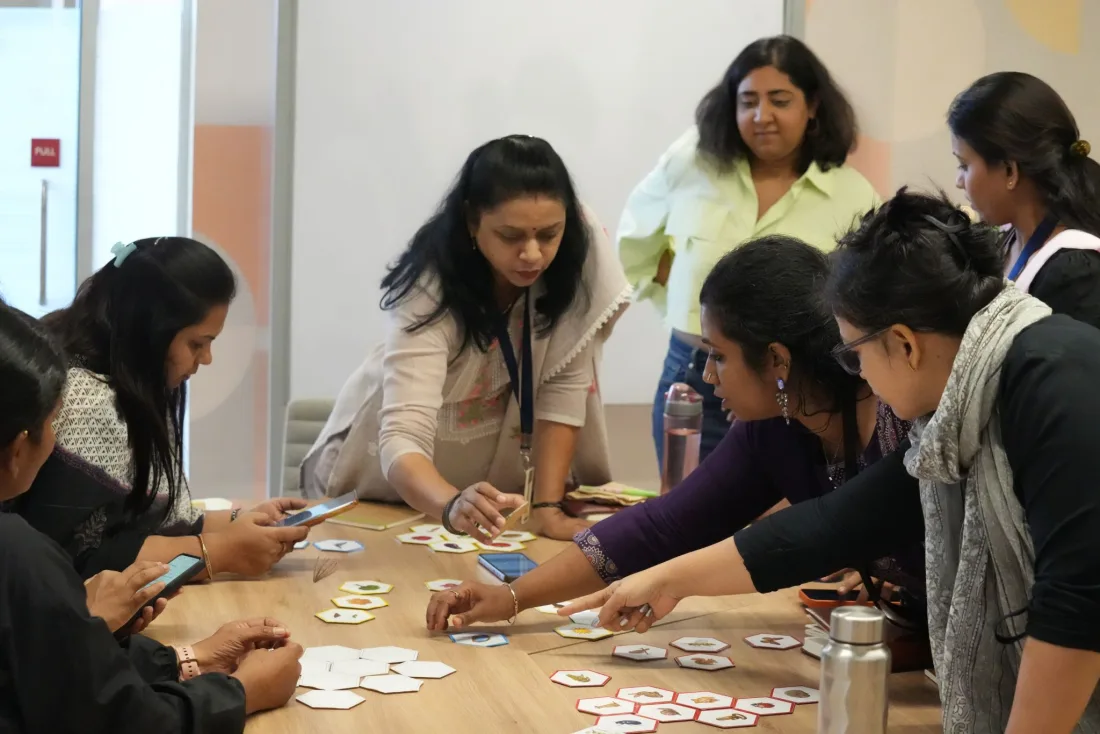
Experiential sessions
Educators play the game, take it apart and rebuild it for their own classrooms.
How we work
Our Approach
play
Play-based learning, experienced first-hand from inside the game.
systems
Systems thinking: reading a classroom, a curriculum, or an ecosystem as a set of connections.
futures
Sustainability education: making ecological ideas tangible enough to act on.
In the room
From our teacher
training sessions
What we run
Design Thinking Workshops
Ecosystem Empathy Lab
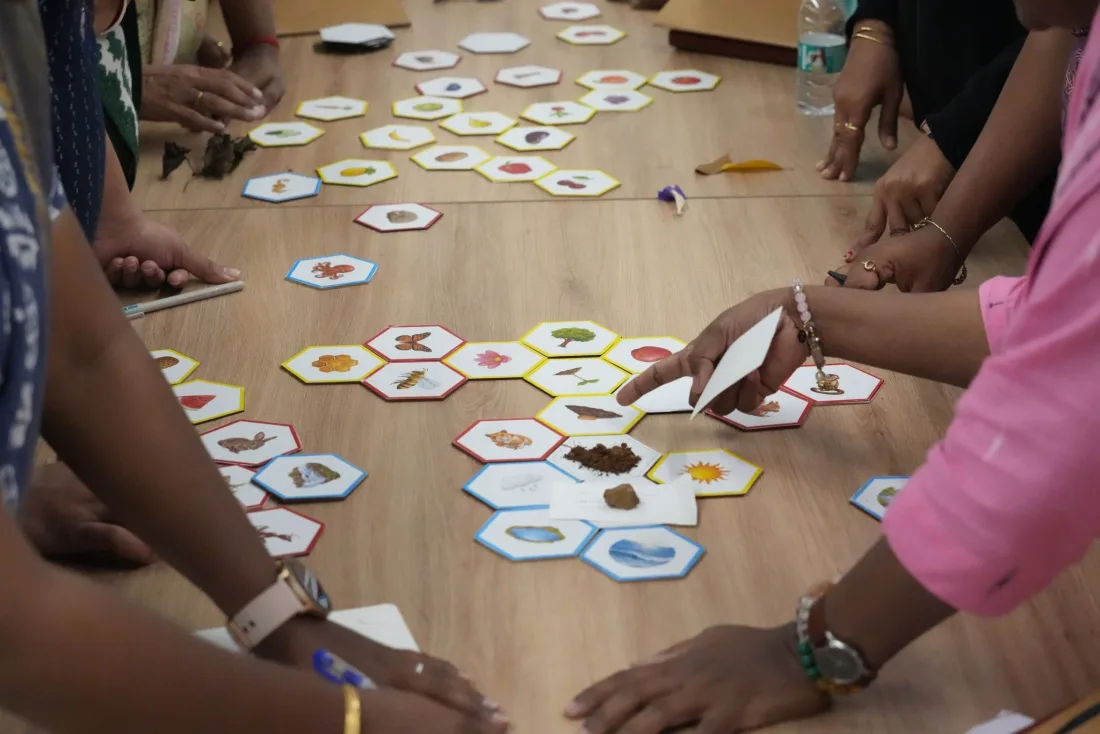
Participants use Growing Minds tiles to explore an ecosystem from the perspectives of plants, animals, water and people. By identifying their needs, contributions and vulnerabilities, they move beyond human-centred empathy. The workshop concludes with a multi-species empathy map highlighting tensions, missing voices and design opportunities.
From Ripple Effect to How Might We
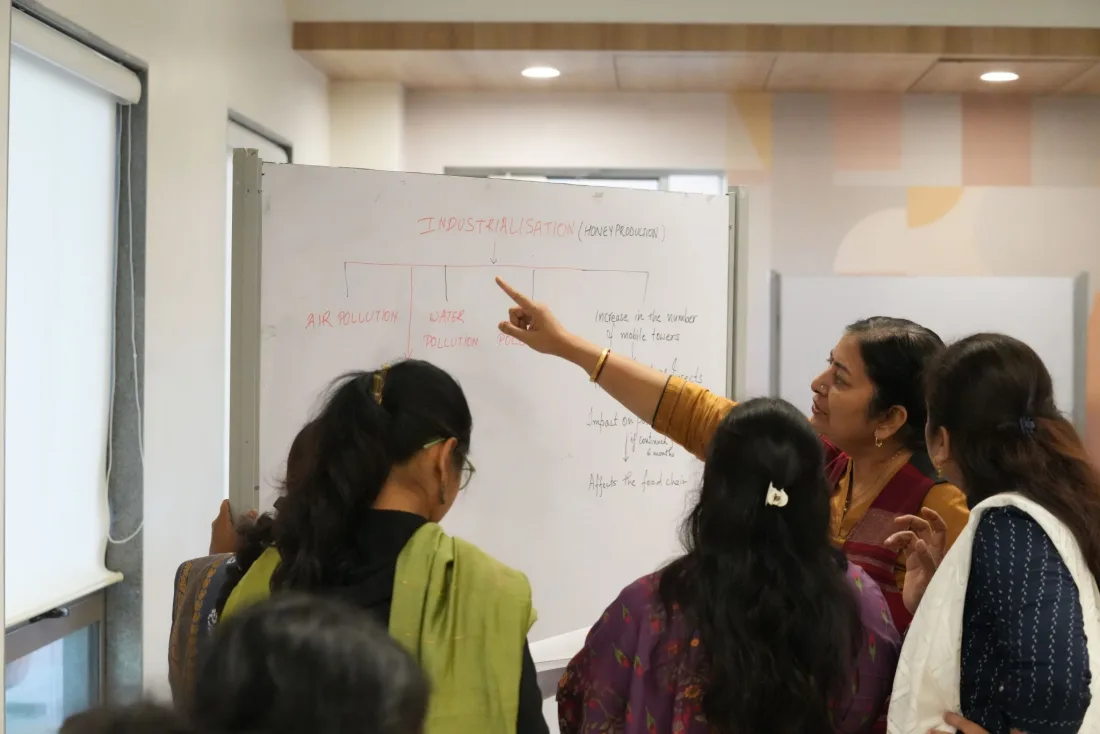
A change or disruption is introduced into the Growing Minds ecosystem to reveal its immediate and long-term effects. Participants trace these consequences across connected elements and reconsider the original problem boundary. Their insights are translated into system-informed How Might We questions that guide responsible design.
Play the Ecosystem
Teachers experience Growing Minds from the learner’s perspective by collaboratively constructing an ecosystem. They observe how play supports curiosity, interdependence, cause-and-effect thinking and collaboration. The session concludes by connecting moments from gameplay with Education for Sustainable Development competencies and possible classroom applications.
Growing Minds in the Curriculum
Participants explore how one Growing Minds experience can connect science, geography, art, language and citizenship learning. They select curriculum outcomes and design activities that take place before, during and after gameplay. The workshop results in an adaptable cross-curricular lesson sequence with clear learning evidence.
Playtest and Reflect
Teachers use Growing Minds as a research-through-design prototype to observe how children think, collaborate and respond to uncertainty. They document learner choices, questions, misconceptions and unexpected uses of the game. The evidence is then used to improve the rules, prompts, materials or facilitation approach.
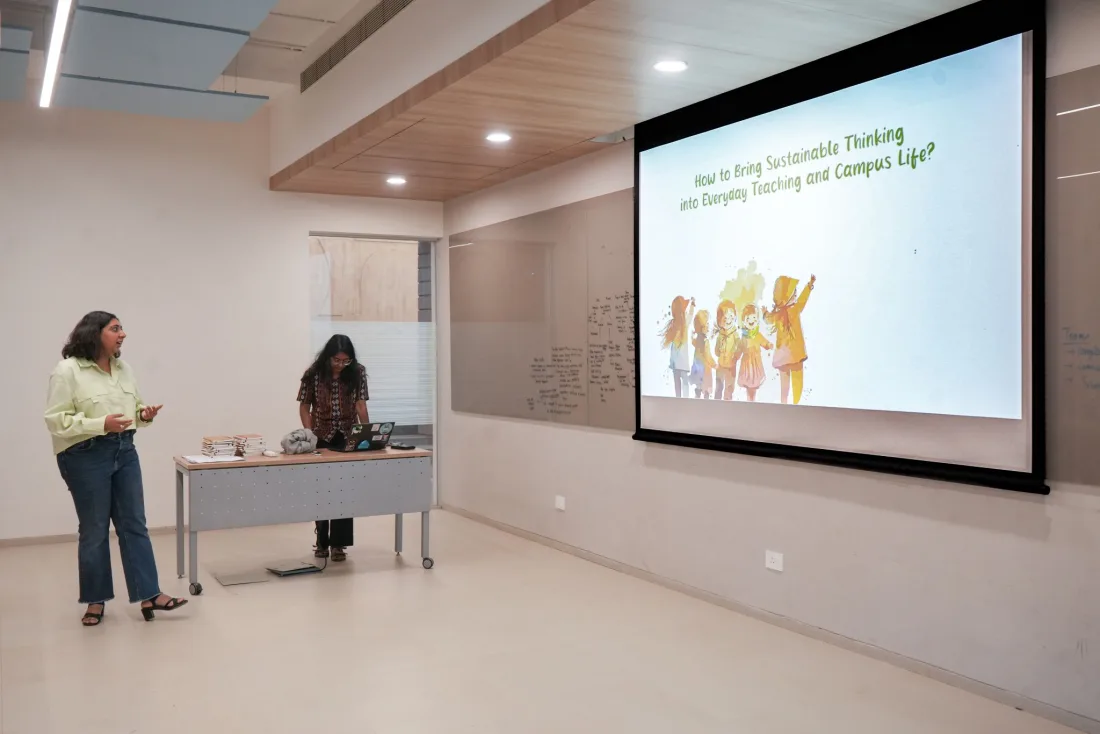
Workshops position teachers as co-creators and designers of learning ecosystems, not just facilitators.